
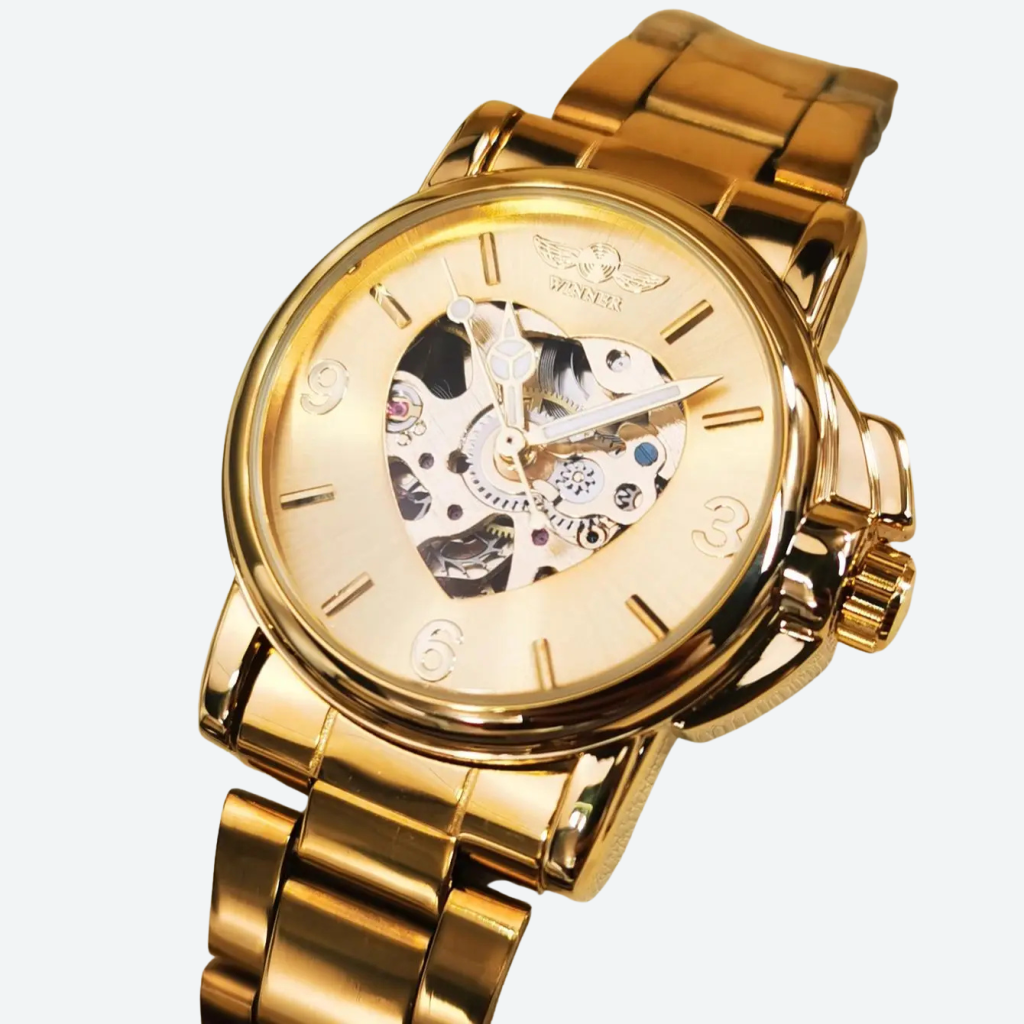
Skeleton watches for women put the movement on display: the dial is cut away, the bridges and wheels are exposed, and the balance wheel can be seen beating with every second. If you want a watch that feels like jewelry but has real mechanical character, an open-dial design is one of the most rewarding choices you can make. The best ladies skeleton watch for you comes down to five decisions: the type of movement, how much of the dial is open, case size, strap or bracelet, and how much legibility you are willing to trade for visual drama. This guide walks through each one so you can choose with confidence.
What is a skeleton watch?
A skeleton watch is a mechanical watch whose dial, and often parts of the movement itself, have been cut away or made transparent so the inner workings are visible. Instead of a solid dial hiding the gears, you see the mainspring barrel, the gear train, the escapement and the balance wheel in motion. Many designs also add a transparent case back, so the movement can be admired from both sides.
You will also see the term open-heart. An open-heart watch keeps most of the dial solid and opens only a small window, usually over the balance wheel. A full skeleton opens most or all of the dial. Both are legitimate styles: open-heart is quieter and easier to read, while a full skeleton is more of a statement piece.
Automatic, hand-wound or quartz: which movement fits you?
The movement is the heart of any skeleton watch, and since it is on display, it matters even more than usual.
Automatic skeleton watches
Automatic skeleton watches for women are a natural first choice, and for good reason. An automatic movement winds itself through a weighted rotor that spins as you move your wrist. As long as you wear the watch regularly, it keeps running without a battery and without daily winding. The rotor is part of the show, too: on a watch with a transparent case back, you can watch it swing every time you turn your hand. Browse our automatic watches for women if self-winding convenience is your priority.
Hand-wound mechanical watches
A hand-wound (manual) movement has no rotor, so you wind it yourself through the crown. Some wearers love this small daily ritual, and the absence of a rotor can leave more of the movement visible from the back. The trade-off is simple: forget to wind it and it stops. If you enjoy interacting with your watch, explore our selection of women’s mechanical watches.
Quartz open-heart looks
Some quartz watches imitate the skeleton aesthetic with printed or decorative cut-outs. They are accurate and low-maintenance, but what you see is a design element rather than a working mechanism. If the appeal of a skeleton dial is watching real gears move, a quartz look-alike will not deliver that experience. If you just want the style with the convenience of a battery, it can be a valid choice, as long as you know what you are buying.
| Movement | How it is powered | Best for | Keep in mind |
|---|---|---|---|
| Automatic | Self-winds through wrist motion | Daily wearers who want a living movement with little effort | Stops if left off the wrist for a while; a winder or a few turns of the crown restarts it |
| Hand-wound | Wound manually through the crown | Enthusiasts who enjoy a daily ritual | Needs regular winding to keep running |
| Quartz open-heart look | Battery | Wearers who want the style with minimal care | The visible parts are decorative, not a working mechanism |
Full skeleton or partial openwork?
How much of the dial is open changes the whole personality of a watch.
- Full skeleton: most of the dial is removed, so the movement becomes the dial. It is the boldest look and pairs well with simple outfits, letting the watch do the talking.
- Partial or decorative openwork: part of the dial stays solid, sometimes cut into patterns such as flowers or petals, with the movement visible through the openings. This approach feels more feminine and jewelry-like.
- Open-heart window: a single aperture over the balance wheel. It is the most discreet option and the easiest to read at a glance.
A good example of decorative openwork is our floral skeleton automatic watch on a Milanese mesh bracelet, where a black skeleton dial reveals a rose gold-tone movement through crystal-set openwork petals.
Case size for slim wrists
Skeleton dials can look busy on a case that is too large, and cramped on one that is too small. As a rough guide, many women with slimmer wrists find cases in the high 20s to mid 30s in millimeters comfortable, while those who prefer a bolder, contemporary look often go a little larger. Diameter is only part of the story, though.
- Lug-to-lug length: the distance from the top lugs to the bottom lugs matters more than diameter for fit. If the lugs extend past the edges of your wrist, the watch will look oversized.
- Thickness: mechanical movements are usually thicker than quartz ones. A slightly thicker case is normal for an automatic watch, but it should still slide under a cuff.
- Bezel width: a thin bezel gives the open dial more room and makes a modest case look larger and more airy.
If unsure, measure a watch you already find comfortable.
Strap and bracelet choices
The strap shapes how the watch feels on the wrist and how it reads with your wardrobe.
Milanese mesh
A finely woven metal mesh is light, flexible and elegant. It sits close to the wrist and suits slim wrists particularly well. Mesh bracelets with a magnetic clasp are quick to adjust to an exact length.
Leather
Leather softens the technical look of a skeleton dial and adds warmth. Colored leather straps can turn an open-dial watch into a fashion accessory, while black or brown keeps it classic. Our women’s automatic skeleton watch with a leather strap and crystal-adorned gold-tone dial, offered in several strap colors, shows how much a strap color can change the mood.
Metal bracelets
A stainless steel bracelet gives a polished, jewelry-like finish and is the most versatile for everyday wear. It also balances the visual weight of a full skeleton dial. For a gold-tone example, see our women’s automatic skeleton watch in elegant gold-tone style, which pairs a gold skeleton dial with a stainless steel bracelet and is listed at $59.95.
The legibility trade-off
The beauty of a skeleton dial comes with one honest compromise: reading the time can take a fraction longer, because the hands sit over a background full of detail. A few design choices make a big difference:
- Contrasting hands: hands in a color that stands out against the movement, such as dark hands over gold or gold hands over black, are easier to spot.
- A chapter ring: a solid ring of hour markers around the edge of the dial gives the eye a clear reference.
- Luminous accents: lume on the hands or markers helps in low light.
- Moderate openwork: partial skeleton and open-heart designs are naturally easier to read than a full skeleton.
If you check the time constantly during the day, lean toward a partial openwork design. If your watch is mainly a style statement, a full skeleton is worth the trade-off.
Matching the watch to your style
A gold-tone skeleton watch reads as warm and dressy and pairs naturally with gold jewelry. Silver-tone and black combinations feel modern and slightly edgier. Cubic zirconia or crystal settings push a watch toward evening wear; our women’s mechanical skeleton watch with cubic zirconia, available in gold-black, white gold, silver-black and silver-white, is a good illustration of that sparkling direction. To compare every open-dial style side by side, browse the full collection of women’s skeleton watches, and if you are looking for a more formal gift-worthy piece, our luxury watches for women are a natural next stop.
Affordable skeleton watches: what to look for
Affordable skeleton watches can be genuinely enjoyable, as long as you check the right details before buying:
- Movement type stated clearly: the listing should say automatic, mechanical or quartz. Vague wording is a warning sign.
- Finishing visible in the photos: look closely at the bridges and plates. Clean edges and consistent plating matter more on an open dial than on a closed one.
- Case back: a transparent case back is a bonus if you want to see the rotor or the full movement.
- Bracelet quality: a well-made clasp and a bracelet that adjusts to your wrist make a watch you actually wear.
How to care for an automatic skeleton watch
- Wear it regularly to keep an automatic movement wound. If it stops, give the crown a few gentle turns before setting the time.
- Avoid strong magnets such as phone cases with magnetic closures, speakers and bag clasps, which can affect the accuracy of a mechanical movement.
- Keep it away from water unless the product specifications clearly state a water resistance rating suited to your activity.
- Clean it gently with a soft, dry cloth. Mesh and metal bracelets can be wiped down; leather straps should stay dry.
- Store it carefully in a soft pouch or box, away from heat and direct sunlight, and consider a watch winder if you rotate between several automatic watches.
- Plan for servicing: like any mechanical watch, it benefits from occasional servicing by a watchmaker over its lifetime.
Frequently asked questions
Are skeleton watches good for everyday wear?
Yes. An automatic skeleton watch is designed to be worn, and regular wear is exactly what keeps it running. For daily use, choose a comfortable case size, a sturdy bracelet or strap, and a dial layout you can read quickly.
What is the difference between a skeleton watch and an open-heart watch?
A skeleton watch opens most of the dial to reveal the movement, while an open-heart watch shows only a small window, usually over the balance wheel. Open-heart designs are more discreet and easier to read; skeleton designs are more dramatic.
Do automatic skeleton watches for women need a battery?
No. An automatic movement is powered by a mainspring that winds itself as you move your wrist. Only quartz watches use a battery.
What happens if I do not wear my automatic watch for a few days?
It will gradually run down and stop. This does not harm the movement. Wind it with a few turns of the crown, set the time, and it will keep running as you wear it.
Which strap is best for a skeleton watch on a slim wrist?
Milanese mesh and slim leather straps are usually the most comfortable on slim wrists because they are light and adjust closely. A metal bracelet works well too, as long as it can be sized properly.