
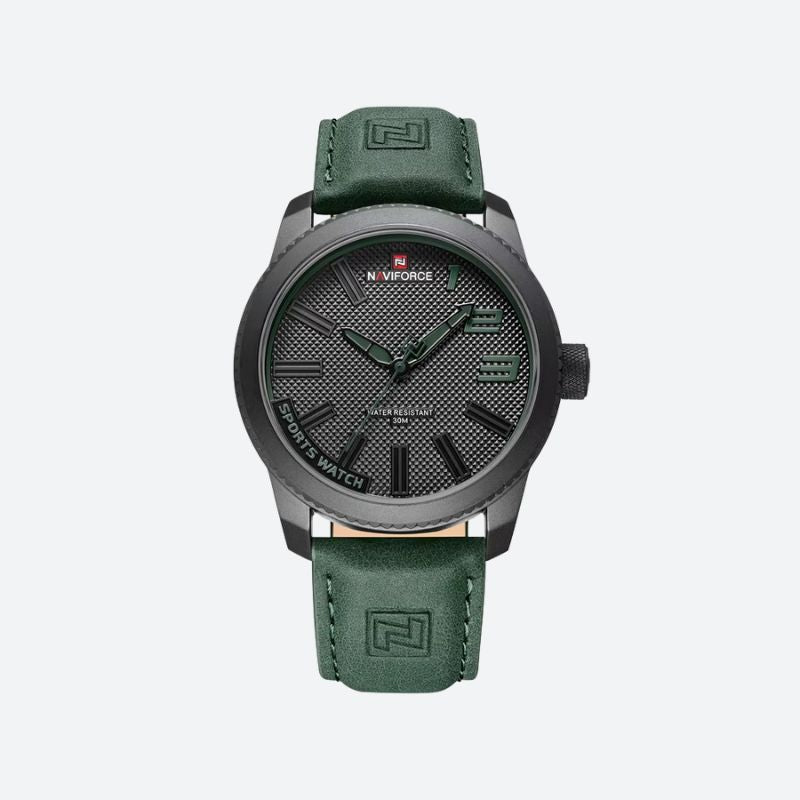
Military watches for men are built around one idea: you should be able to read the time instantly, in any light, without worrying about the watch itself. That brief produced a few distinct families that still shape what you see in stores today: the field watch worn by infantry, the pilot or air force watch made for cockpits, the dive watch developed for naval units, and the tactical digital watch. This guide explains where each style came from, the features that define a genuine military look, and how to choose and wear one in everyday life.
Why Military Watches Still Matter
Before the twentieth century, most men carried pocket watches. During the First World War, officers found that pulling a watch out of a coat pocket was impractical in the field, so wristwatches with wire lugs and protective cages, later called trench watches, became common. The wristwatch went from a novelty to standard equipment, and the military set the rules for what a reliable everyday watch should look like.
Those rules were functional rather than decorative: high-contrast dials, luminous hands, sturdy cases, and straps that could survive mud, sweat, and water. The same qualities make military-inspired watches a smart choice for men who want one watch that works at the office, on a hike, and on the weekend.
The Main Types of Military Watches
The Field Watch (Army Style)
The field watch is the purest form of the army style watch. During the Second World War, the US military issued wristwatches built to a specification known as A-11, which called for a black dial, white numerals, luminous hands, and a seconds hand that could be stopped to synchronize with other watches. That template defined the American military watch for decades.
A classic field watch has a modest case size, full Arabic numerals from 1 to 12, often an inner ring with 13 to 24 for military time, and a simple strap in canvas, nylon, or leather. It does not try to impress. It tries to be read in a fraction of a second, which is exactly why it remains so wearable today.
The Pilot Watch (Air Force Style)
Air force watches were designed for a different environment: a cramped, vibrating cockpit, often at night, with gloved hands. Pilot watches from that era, such as the German Flieger, typically had large cases, oversized crowns that could be turned with gloves on, and a distinctive triangle marker at 12 o’clock so the pilot could orient the dial at a glance.
Pilot watches later absorbed the chronograph. A stopwatch function let aviators time legs of a flight, fuel use, or bearings, and many pilot designs added tachymeter or slide-rule bezels. If you like the cockpit look, browse our pilot-style chronographs, which pair large, legible subdials with a sporty case.
The Dive Watch (Naval Style)
Naval and combat diving units needed watches that could stay sealed underwater and track elapsed time. The answer was the rotating bezel: a diver lines up the bezel marker with the minute hand and reads elapsed time directly from the scale. Dive-style military watches usually feature heavy lume, screw-down crowns, and rubber or nylon straps.
The Tactical Digital Watch
From the late twentieth century onward, many soldiers adopted digital watches with backlights, alarms, stopwatches, and multiple time zones. Tactical digital watches tend to have rugged resin or metal cases, protected buttons, and negative or high-contrast displays. They are less romantic than a vintage field watch, but extremely practical for training, outdoor work, and sport.
Features That Define a Military Watch
Whatever the type, a watch earns the military label through a short list of practical features. Here is what to look for and why it matters.
| Feature | What it is | Why it matters day to day |
|---|---|---|
| High-contrast dial | Light numerals on a dark dial, or the reverse, with minimal clutter | You read the time instantly without squinting |
| 24-hour scale | An inner ring showing 13 to 24 alongside the 1 to 12 numerals | Makes military time easy to read and helps with travel or shift work |
| Luminous hands and markers | Lume that glows after exposure to light | Readable in a dark room, a car, or outdoors at night |
| Rugged strap | Nylon, canvas, or thick leather | Comfortable, durable, and easy to swap |
| Water resistance | A sealed case rated for splashes or swimming, depending on the model | Rain, hand washing, and sweat are no longer a worry |
| Simple, solid case | Matte or brushed finish, often in steel | Hides scratches and avoids glare |
Understanding the 24-Hour Scale
The 24-hour scale is the detail that most clearly signals a military watch. Armed forces use the 24-hour clock to avoid any confusion between morning and evening, so 1500 means 3 p.m. On a field watch, the outer numbers show the standard hours, while the small inner numbers show the afternoon and evening equivalents. Once you get used to it, it is a genuinely useful feature, especially if you travel or work irregular hours.
Water Resistance: Read the Rating
Military-inspired does not automatically mean dive-ready. Always check the water resistance indicated for the specific model. A basic rating is fine for rain and hand washing, while swimming calls for a higher rating, and serious diving calls for a dedicated dive watch. If in doubt, keep the crown pushed in and avoid pressing buttons underwater.
How to Choose a Military Watch for Everyday Wear
The best military watch for you depends less on history and more on how you will actually wear it. A few questions narrow it down quickly.
- What is your main use? For office and casual wear, a field watch or a clean pilot watch is the most versatile. For outdoor work, training, or the gym, a tactical digital or a sports model with a rubber or nylon strap makes more sense.
- What size suits your wrist? Field watches traditionally run smaller, while pilot watches run larger. On a slim wrist, a mid-size case looks balanced; on a larger wrist, a bigger pilot case can work well. Pay attention to the lug-to-lug length, not just the diameter.
- Analog or digital? Analog watches give you the classic look and the 24-hour scale. Digital watches add alarms, timers, and backlights. Some hybrid designs combine both.
- Which strap fits your lifestyle? Nylon and canvas are light and quick-drying. Leather looks sharper with a shirt or jacket and develops character over time.
- Do you want extra functions? A chronograph is great if you time things often, such as workouts, cooking, or parking. If you only need the time, a simple three-hand field watch keeps the dial cleaner.
For a curated starting point, our selection of men’s military watches brings together field, pilot, and tactical styles in one place. If you prefer a broader view, the full military watch collection is another good place to compare dials and straps side by side.
How to Style a Military Watch
Part of the appeal of a military watch is that it does not demand a specific outfit. Still, a few pairings work especially well.
- Casual and weekend: A field watch on a nylon or canvas strap pairs naturally with jeans, chinos, a T-shirt, an overshirt, or a field jacket. Olive, khaki, and navy straps echo the original military palette.
- Smart casual: Swap the nylon strap for brown or black leather and the same watch looks right with an oxford shirt, a knit polo, or an unstructured blazer. A model such as our men’s leather sport watch with a military-style dial shows how leather softens the utilitarian look.
- Active days: For running, the gym, or outdoor work, choose a digital or sports model with a resin or rubber strap, which is easy to rinse and dry. Our men’s sports watches include many models designed for that kind of routine.
- Office wear: A pilot watch with a clean dial and a dark leather strap looks purposeful without being flashy. Keep the case proportionate to your wrist so it slides under a shirt cuff.
A simple rule: match the strap to your shoes or belt when you dress up, and match it to your outerwear when you dress down. If you like the idea of one watch that crosses both worlds, start with our men’s leather watches and add a nylon strap for weekends.
Caring for a Military-Style Watch
Military watches are built to be worn hard, but a little care keeps them looking good for years.
- Rinse nylon and rubber straps in fresh water after exposure to salt water or heavy sweat, then let them dry fully.
- Keep leather straps away from prolonged soaking, and let them air out after a hot day.
- Wipe the case and crystal with a soft, dry cloth to remove dust and fingerprints.
- For quartz models, have the battery replaced when the seconds hand starts skipping or the watch stops, and ask for the seals to be checked at the same time if you rely on water resistance.
- Store the watch away from strong magnets and extreme heat when you are not wearing it.
Frequently Asked Questions
What is the difference between a field watch and a pilot watch?
A field watch was designed for ground troops: compact, simple, highly legible, and often with a 24-hour scale. A pilot watch was designed for aviators: usually larger, with a big crown for gloved hands, a strong 12 o’clock marker, and often a chronograph or navigation bezel.
Are military watches good for everyday wear?
Yes. Their clear dials, sturdy cases, and comfortable straps make them some of the most practical watches you can wear daily. A field watch on leather or nylon works with most casual and smart casual outfits.
What does the 24-hour scale on a military watch mean?
The small inner numbers from 13 to 24 show the afternoon and evening hours in military time. When the hour hand points to 3 in the afternoon, the inner ring reads 15, or 1500 in military notation.
Can I swim with a military watch?
It depends on the water resistance of the specific model. Many military-style watches handle rain and splashes, but only models with a suitable rating should be worn for swimming. Always check the product details before getting it wet.
Which strap is most authentic for an army style watch?
Canvas and nylon are the most associated with military use because they are light, durable, and quick to dry. Leather is equally historical, as many early service watches were issued on leather straps, and it looks more refined for everyday wear.